
Toombs County Arrest Report Sources
The Toombs County Sheriff's Office publishes no rolling 72-hour, weekly, or multi-day arrest log. Its Zuercher portal serves as a current-custody roster only. Someone held on an older arrest date can appear there. A person leaves the list after release or transfer. It answers present status well. But it cannot replace a chronological blotter. There is no dated sheriff PDF archive, historical roster export, or guaranteed booking-photo feed either. That gap shapes every search. Keep a news report's publication date separate from its listed arrest date. Keep both separate from the day the roster was checked. Three timestamps can mark three stages of the same matter.
The strongest recurring multi-day account is The Advance's "From the Record" blotter. It covers arrests reported during the prior week. Items are grouped under Lyons, Toombs County, Vidalia, and nearby agency headings. The paper says its incidents come straight from police files. Still, it remains a newspaper retrospective, not the official Charles Durst Detention Center record.
Read Toombs Arrest Reports
Start with the date and the scope statement. A single Toombs County report may mix city police, the sheriff, and neighboring agencies. The heading tells you which agency supplied the item, and the arrest date tells you when the event itself occurred. Neither one proves the person is still in custody.
- Open the newest dated blotter and identify its stated reporting period.
- Choose the Lyons, Toombs County, or Vidalia section that matches the arresting agency.
- Read the name, arrest date, and charge wording exactly as reported.
- Compare current custody with the official TCDC roster.
- Use a written agency request for the booking sheet or an older report.
The Arrested Today page answers fresh custody questions. Multi-day reporting answers something different: what agencies reported over several days, including arrest records that no longer sit in the live roster.
Toombs Arrest Entry Fields
Local news sources usually reprint limited police-file details. That presentation is not a full jail booking sheet, and no blotter serves as a booking-photo gallery.
| Entry part | How to interpret it |
|---|---|
| Name | The reported identity; confirm spelling with the source record. |
| Arrest date | The reported event date, not necessarily the article date. |
| Agency section | Lyons PD, Vidalia PD, Toombs SO, or another named agency. |
| Charge wording | An charge drawn from a police file, not a conviction. |
| Custody status | Usually not established by the weekly item; check the official roster. |
| Photograph | No booking-photo gallery was observed in the reviewed blotters. |
City labels can mislead readers. “In Vidalia” or “In Lyons” often marks the reporting section, not the courtroom where a case ends up. The Charles Durst Detention Center holds arrestees for both city departments and the sheriff. So a person arrested by city police can land in the county jail. That booking may not last long. Jail rosters shift as arrestees move through the system. A weekly arrest report moves slower than the roster does. Someone listed under a city agency could already be off the county list by press time. Case outcomes belong in the court file, so follow the matter there rather than treating the original report as final.
Weekend Toombs Arrest Reporting
No Toombs County law-enforcement source follows a fixed weekend or holiday posting schedule. The Advance's weekly cycle means a Saturday arrest can surface in a later issue. Southeast Georgia Today posts periodic Area Police Blotter articles. But the interval varies. A gap over a holiday is a publication gap, not proof that nobody was arrested.
The live jail roster may update on its own unpublished schedule. Search it for present custody. Then save the date and source of any multi-day item. A specific past booking calls for the official record. Do not wait on a news roundup.
Agency headings matter most during a mixed reporting week. The Advance may file an item under "In Lyons," "In Toombs County," or "In Vidalia." Southeast Georgia Today splits Vidalia PD material from sheriff material. Those labels help route a request. But they do not always identify the court that later receives the case. Note the agency and date first. Then use a case number or defendant name to find the right docket.
Toombs Arrest Report Archives
Toombs County's sheriff keeps no public archive of past rosters. Georgia's local-government schedule fills part of that gap on paper, at least in theory. Jail booking records stay on file ten years after release. Jail registers last ten years after the final entry. Investigation logs run three years after release. Hold records go back two years after release to the requesting agency, and transfer or extradition files for five. The county custodian can confirm which series governs a given arrest record and whether a legal hold extends it.
Retention and online visibility are two different things. A live roster drops a person once released. The booking sheet still sits in the sheriff's files. A news article about a Toombs County arrest can stay searchable for years after the roster changed. So ask the custodian three questions. Which approved series covers the document? Does the county still hold it, and is any part exempt from public release?
Booking records travel through the official sheriff request page. Give the name, date, case number if you have it, arresting agency, and the exact record you want. Electronic delivery is worth requesting. The office lists Jennifer Kell as records contact, phone 912-526-4388, fax 912-526-3310, and openrecords@toombscosheriff.org.
The request can cover the jail booking record, the register entry, booked charges, bond or hold details, and any booking photo kept on file. City incident reports go elsewhere. Send those to the arresting city agency. Georgia's public-records process does not force an agency to build a weekly arrest summary it never kept.
Note: A record can vanish from the public roster while the official copy remains under an approved retention schedule.
Area Police Blotter Patterns
Southeast Georgia Today's Area Police Blotter splits its items by agency. Vidalia Police Department entries sit apart from Toombs County Sheriff's Office reports. That split helps you find the right custodian. It points to the agency holding a given arrest record. Some items reach beyond Toombs County, though. Check the agency and date on each entry yourself. The blotter article shows how this periodic local report is laid out.
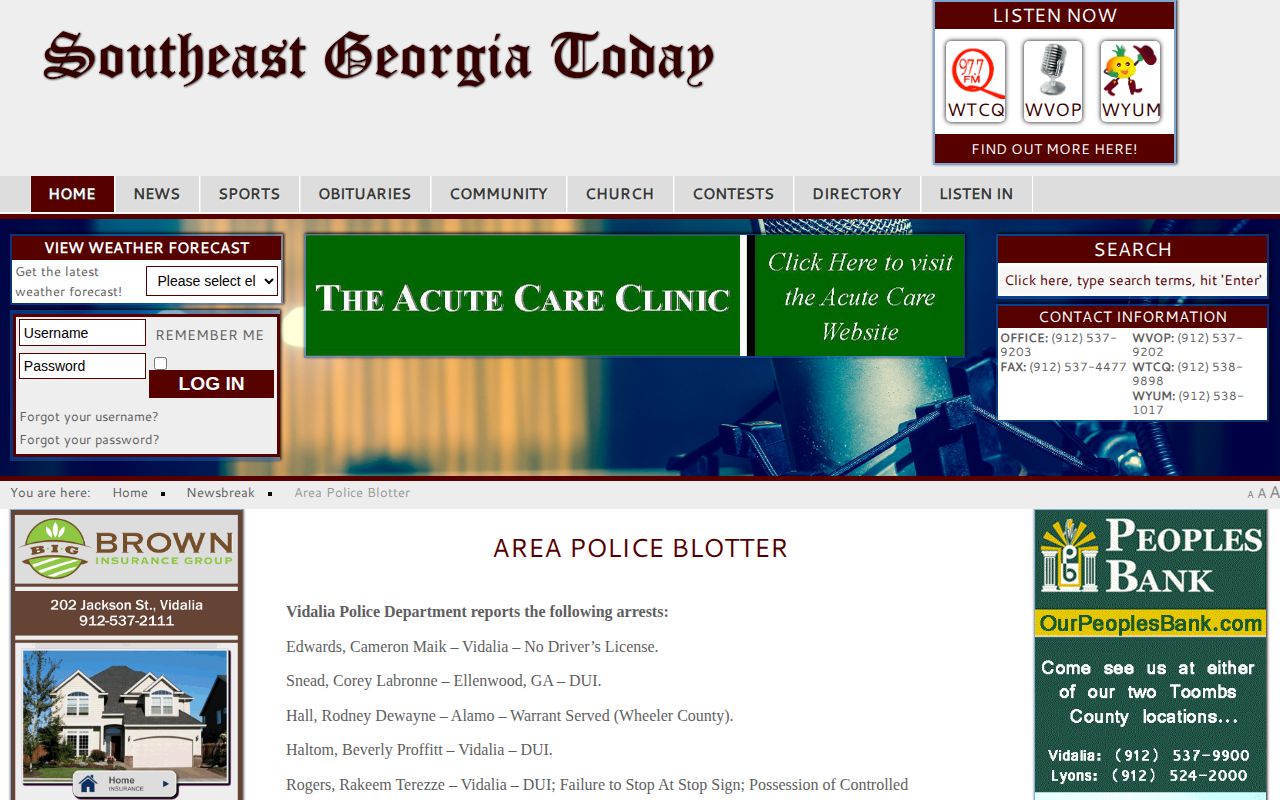
A news format, then, not a live government roster.
Unofficial Toombs Arrest Archives
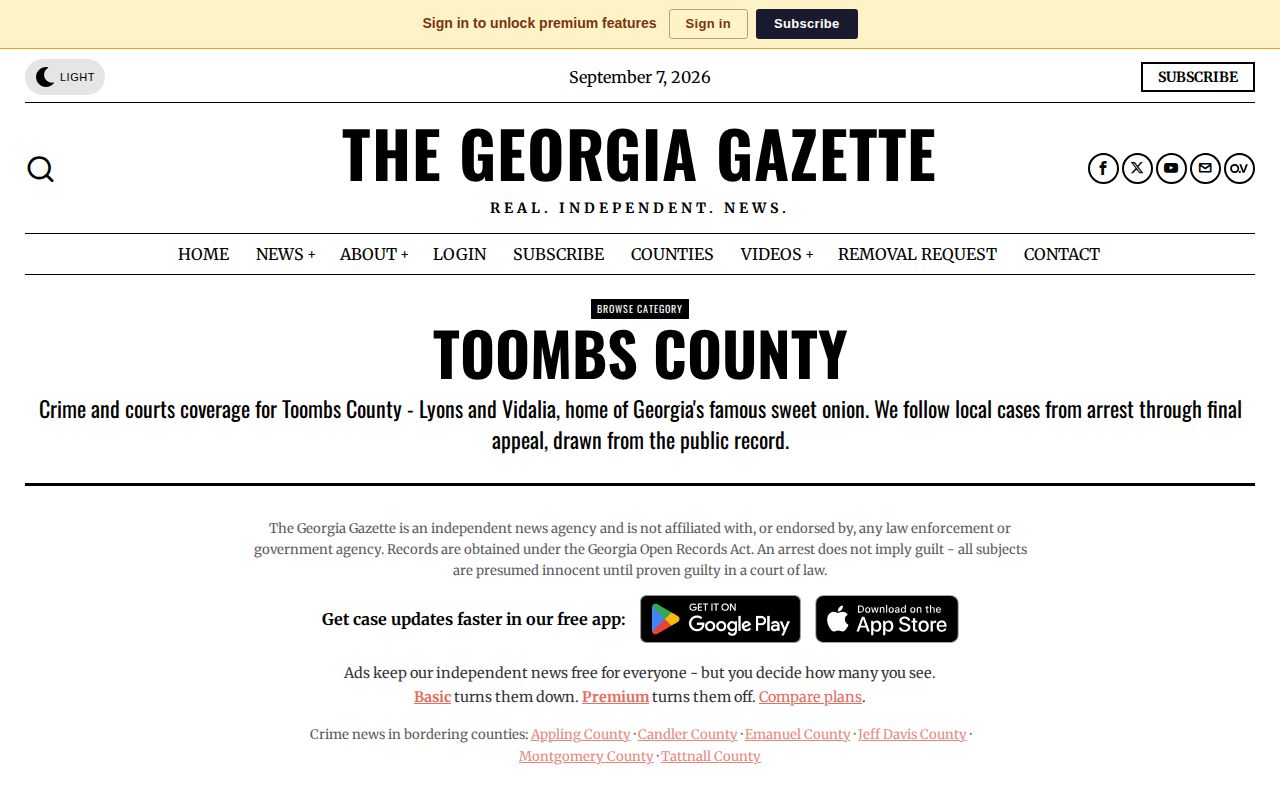
The Georgia Gazette Toombs section tracks local arrest and court coverage across many pages. It calls itself independent of government. The archive runs deep. Entries can outlast a person's stay in jail, yet the site is not an official photo or custody source. Material can also be stale or incomplete. The Georgia Gazette county section gives a sense of that archive's reach.
Busted Newspaper keeps a Toombs County archive too. It is a commercial booking publisher. No county agency stands behind it. Deep pages show persistence, not freshness, and none of it confirms current custody. Check any entry against the sheriff's record and the court docket. The Busted Newspaper deep archive shows why publication date and arrest date must be read separately.
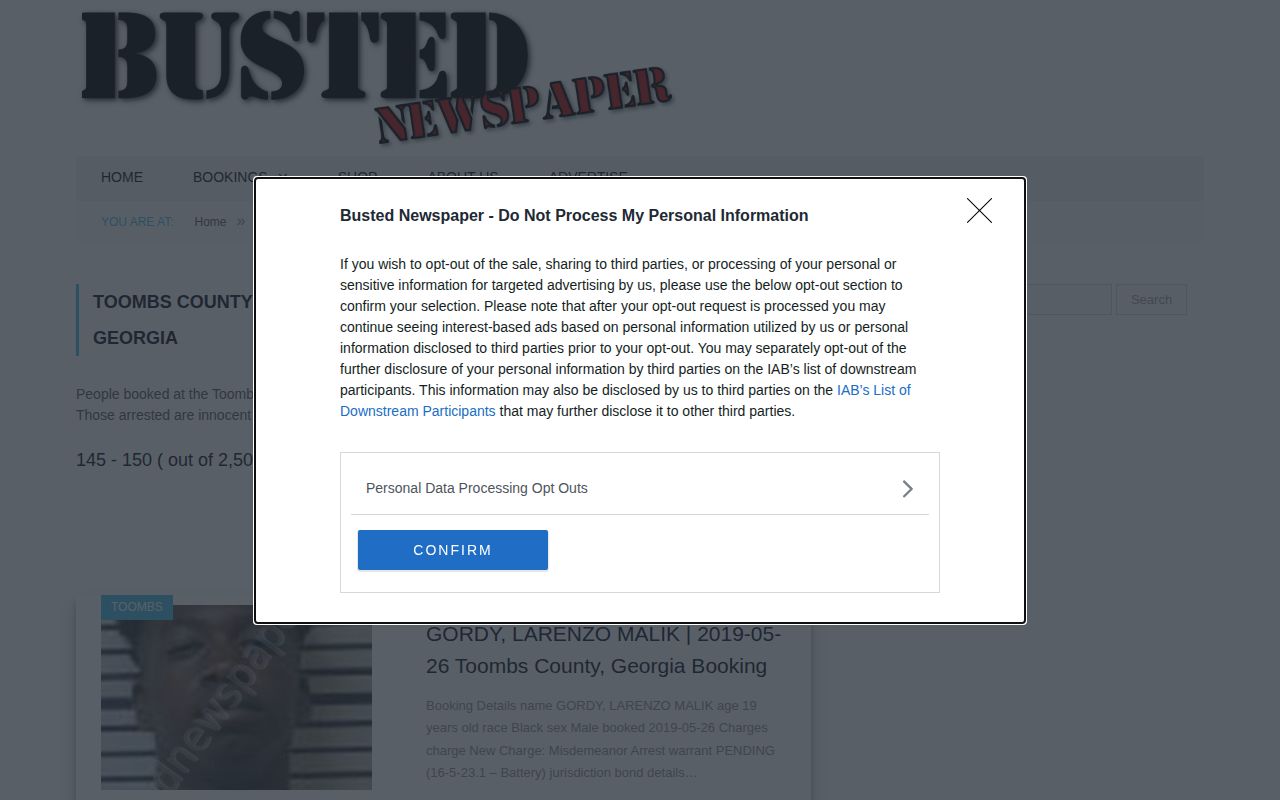
An old third-party entry can stay online long after the official roster moves on. The Advance has a separate historical trail through Georgia Historic Newspapers. Older "From the Record" pages carry the same city and county divisions. That archive tells you what the paper printed on a past date. It is not proof every arrest made print. Not every Toombs County booking made the paper. It is not a certified jail record either. When exact charge, bond, or booking details matter, go to the source agency. Southeast Georgia Today and the Gazette add depth differently. The first organizes periodic agency reports. The second follows selected arrest and court stories through long pagination. Neither meets an official completeness standard for all TCDC bookings. Compare the article with the jail record. Then let the court docket show how the case developed after publication.
Arrest Reports Are Allegations
A weekly blotter is a snapshot, not a case file. The court record tells the fuller story. First figure out which court holds the matter. Toombs cases sit in Superior, State, Magistrate, or a municipal court. Booking agency alone decides nothing. Match the defendant name, case number, and filing date, then read the latest docket and final order. Charges can shift as a case moves forward, and the file shows what actually happened after the arrest. For certified copies, go to the clerk or the originating agency. A newspaper clipping cannot certify a court order. Rely on the official record.
Public Record Search
Sponsored Results